
Craig Projected Versus Actual Release
A projected date is a calculation based on the sentence and facts recorded at that point. It can help with planning, but it is not a certificate that release occurred. An actual release date records a completed custody event. Even then, read the release method and destination. Transfer from Botetourt–Craig Regional Jail to VADOC, another jail, BOP, or ICE ends the local booking without placing the person in the community.
Pretrial custody works differently. A person awaiting a Craig County case has not yet received a final active sentence from which a normal completion date can be calculated. Bond may be posted, a judge may change the order, the charge may proceed, or a detainer may prevent departure. The jail record and Craig court docket are the right sources. Applying a prison credit percentage to a pending case creates a false date.
- Projected date
- A future date computed from current sentence and credit information.
- Actual release
- The completed event documented by the jail or corrections agency.
- Active sentence
- The part of a sentence that must be served, apart from suspended time.
- Detainer
- A request or legal hold that can lead to custody by another agency.
Find Craig Inmate Release Dates
Start with the custodian. Craig County does not operate its own stand-alone jail. The Botetourt County Sheriff's Office operates Botetourt–Craig Regional Jail in Fincastle, and its Citizen Connect portal shows current confinements and admissions rather than releases. VADOC handles state sentences and supervision. Federal and immigration systems have separate locators. A search should move to another system only when the court or custody record supports that move.
For a state case, the VADOC Inmate and Supervisee Locator is the public starting point. VADOC says it supplies location and a release-date field for people under its custody and updates daily. Research did not verify that fully discharged inactive records stay visible. It also did not establish a different label such as estimated or projected. Preserve the wording shown by the live result.
- Decide whether the person is pretrial, serving a local jail term, serving a VADOC sentence, or under another custodian.
- For VADOC, search by seven-digit DOC ID when possible. Otherwise use the first three letters of the first name and full last name.
- Compare the displayed location and release-date field with the sentence and court case. Do not rely on name alone.
- For Botetourt–Craig, call 540-928-2314 or request the existing release and time-computation record from jail records.
- Review the Craig sentencing order for active time, suspended time, jail credit, and later amendments.
- After the expected date, ask for the dated Order of Release, release authorization, or jail release entry to prove the event.
The official VADOC locator page shows the search route used for a state sentence.
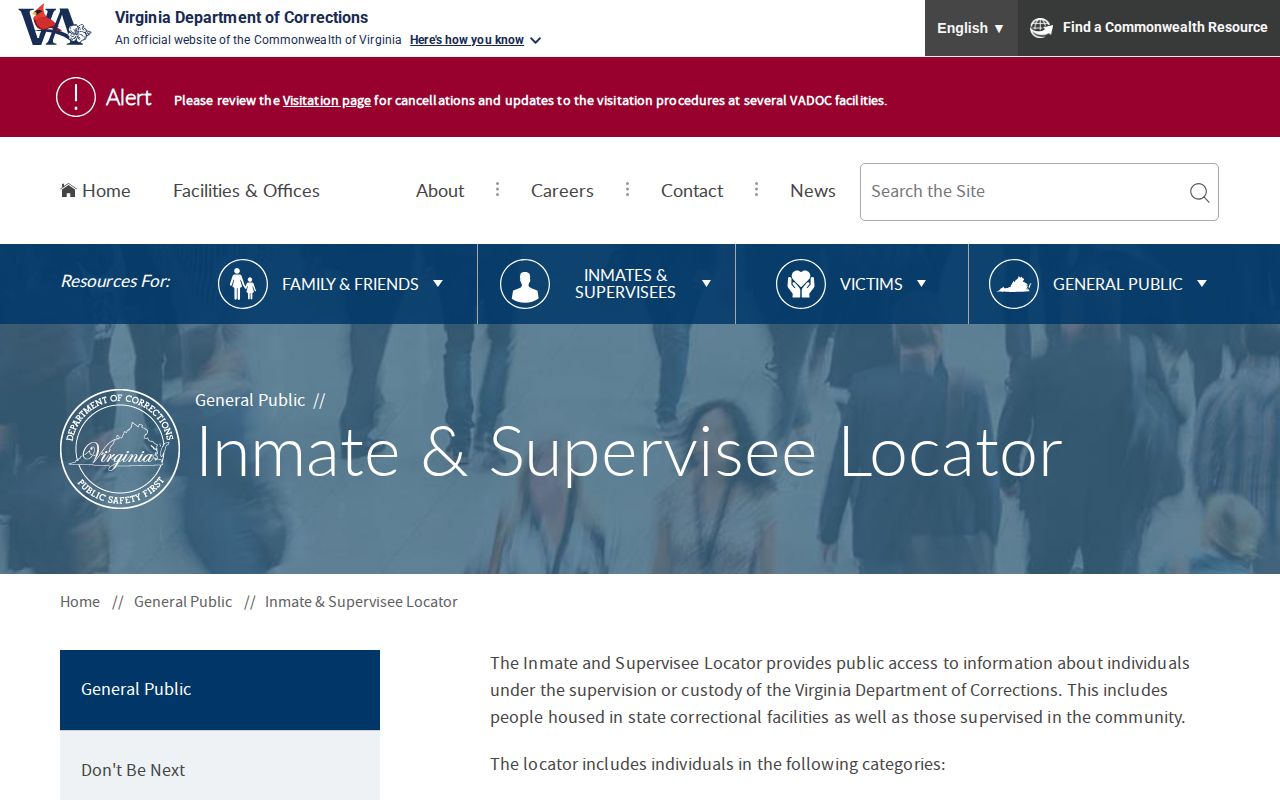
The result must be read in context because a supervision location may describe someone already out of prison. Fully inactive records require the VADOC records process.
Craig Release Date Credit Systems
Virginia uses more than one sentence-credit framework. Good Conduct Allowance, or GCA, generally applies to felony offenses before January 1, 1995 and misdemeanor offenses before July 1, 2008. For qualifying active or composite parole-eligible terms longer than twelve months, VADOC may calculate discretionary-parole eligibility, mandatory-parole release, and good-time release. The class can range from no credit to thirty days for each thirty served under §§53.1-198 and 53.1-202.
Earned Sentence Credit, or ESC, generally applies to felonies committed on or after January 1, 1995. Under Virginia Code §53.1-202.3, the listed ESC-1 offenses earn at most 4.5 days for each thirty served. That is the source of the common statement that a person serves roughly eighty-five percent. Other eligible ESC-2 offenses can earn up to fifteen, 7.5, 3.5, or zero days for each thirty based on level, conduct, and program rules. One percentage does not fit every sentence.
The VADOC Time Computation page separates these systems and lists the facts used in the agency calculation.
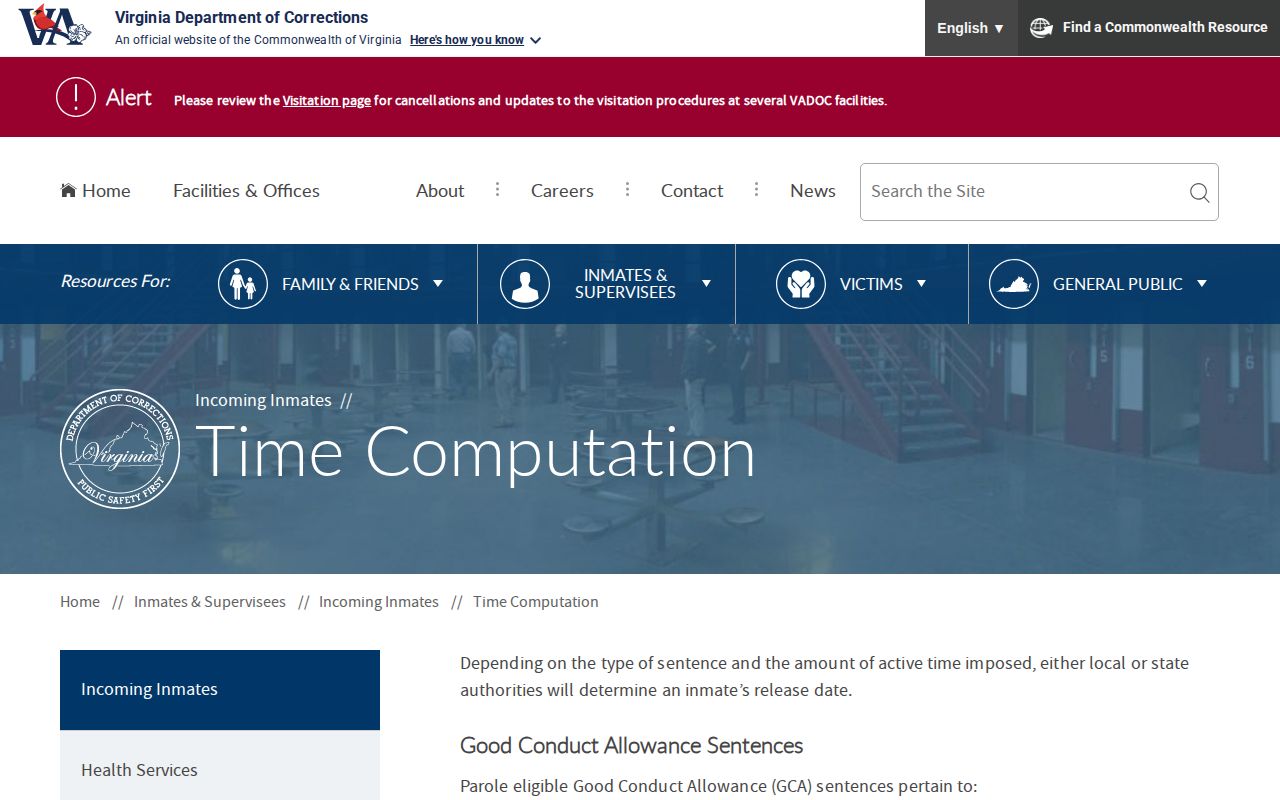
This state framework belongs to VADOC cases. It should not be copied onto a short Botetourt–Craig jail term without the governing sentence and agency calculation.
Why Craig Release Percentages Mislead
The distinctive Virginia issue is that the popular eighty-five-percent shorthand describes only the maximum ESC-1 rate. It does not cover ESC-2's higher potential credit, pre-1995 felony GCA cases, every misdemeanor, parole eligibility, or local jail time. Two people with the same announced sentence can have different dates because their offense dates, statutes, active terms, credit classes, and jail credits differ.
Do not calculate a Craig County projected release date from the sentence length alone. Read the offense date and statute, then separate active time from suspended time. Account for credit awarded for time held before transfer. Determine whether terms run together or one after another. Finally, use the current agency calculation. That sequence is slower than a flat percentage, but it avoids giving a family or released person a date Virginia law does not support.
Note: The court imposes the sentence, while VADOC computes qualifying state time from the governing record and credit rules.
Craig Release Date Calculation Variables
VADOC identifies several inputs that can affect a date. The original sentence is only the start. A person may have more than one case, and terms can be concurrent, meaning served at the same time, or consecutive, meaning served one after another. Pre-transfer jail credit must be posted correctly. Conduct and program status affect the credit class for eligible sentences.
Later legal and administrative events can alter the calculation. The table distinguishes changes to the projected date from events that may redirect the person at the end of the sentence.
| Factor | Possible effect | Best record |
|---|---|---|
| Jail credit | Credits qualifying time held before the state computation | Sentencing order and time-computation record |
| Concurrent or consecutive terms | Changes whether terms overlap or add together | Court sentencing orders |
| Credit class or discipline | Changes earned credit through forfeiture, restoration, or level | VADOC computation |
| New or amended court order | Can change active time or sentence structure | Certified court order |
| Parole action | May start release planning in an eligible case | Board decision and later VADOC release authorization |
| Detainer or hold | May send the person to another custodian instead of the community | Release document naming the receiving agency |
Craig County Jail Date Limits
A Craig local-jail sentence cannot safely be estimated from state-prison shorthand. Some people with longer terms may remain in a local jail while VADOC computes time, which can make both agencies relevant. For others, the Botetourt–Craig record and committing court control. Ask the jail for the existing calculation or release entry and use the Virginia court case gateway to identify the sentencing order. Include the case number, booking number if known, and approximate dates.
The regional portal's Last 24 Hours choice sits under admissions. It is not a release-date report. A name disappearing from Current Confinements might reflect release on bond, a court order, sentence completion, or transfer. Call the twenty-four-hour jail line for a prompt status check, then request the recorded date, time, release reason, and receiving agency when formal proof is needed. For a detailed records path, consult the Craig County released-inmate record process.
No official Botetourt–Craig rule was found for a gate release hour, weekend processing, transport, or property pickup. Do not import VADOC's prison policy into the regional jail. Note: The VADOC deadline described below is a state-facility rule, not a local jail promise.
Craig State Release Day Records
For a VADOC facility release, the agency states that release occurs by 11:59 p.m. on the release date, weather permitting. Records staff address pickup or public transportation, and the business office may arrange bus travel. Staff review identity and education documents in the property envelope, return applicable property, and collect prison clothing. Medical can provide up to thirty days of discharge medication or supplies.
Except in detainer cases, VADOC supplies the Offender Pay balance and adds funds when that balance is below twenty-five dollars so the person leaves with twenty-five dollars. Money posted too late is sent within five business days. These details help distinguish an actual state-prison release process from a projected locator field. They are not Botetourt–Craig policies.
The VADOC facility-release page identifies the documents and state process tied to departure.
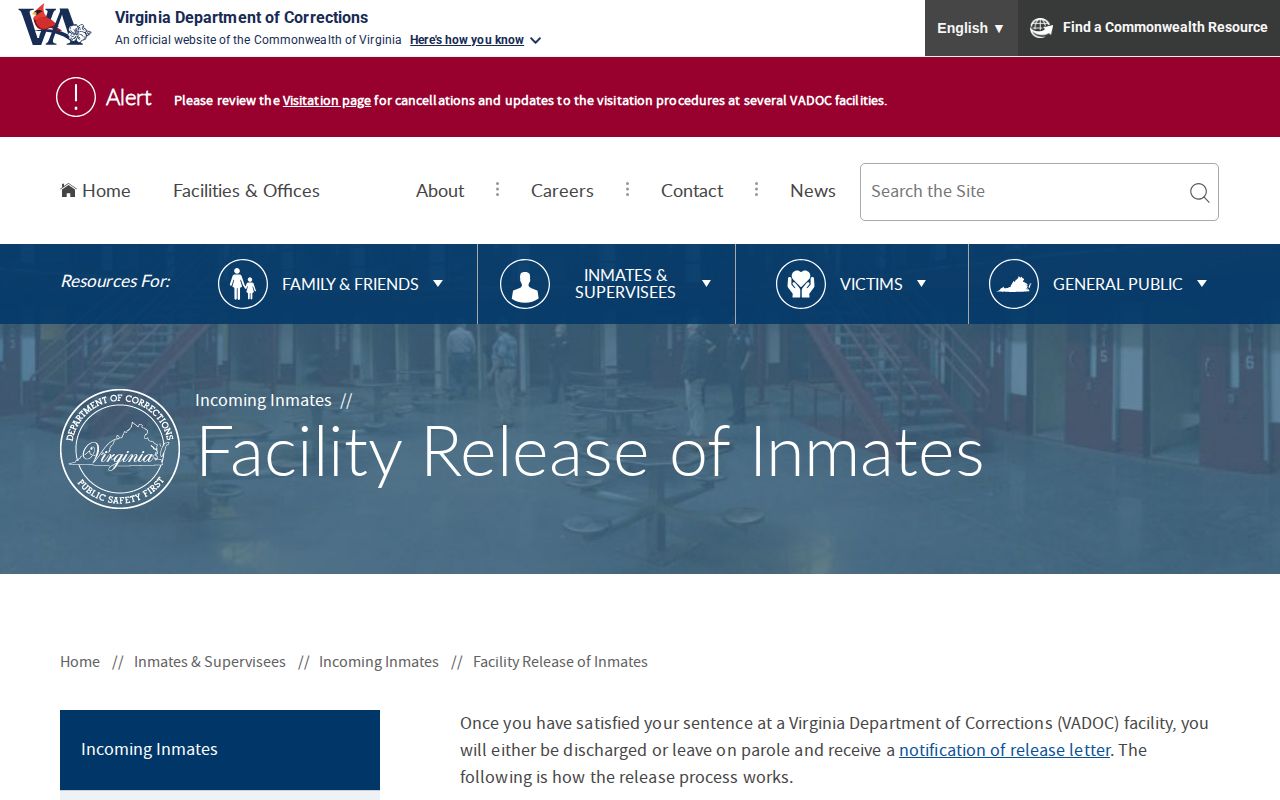
A signed and dated Order of Release, Conditions of Probation, or Conditions of Parole supports what occurred. VADOC procedure also calls for verification of the discharge date against authorization documents and entry in VACORIS.
Confirm Craig Actual Release Dates
After the projected day passes, check the right system again. A VADOC locator result may reflect custody or community supervision, while a fully discharged record may no longer be promised in the public search. Ask VADOC for the notification-of-release letter, Order of Release, release authorization, or discharge-date record. If parole was involved, a Board grant remains separate from the later physical release.
For a local case, obtain the Botetourt–Craig release entry and compare it with the Craig court disposition. If the entry names a transfer, use the receiving system. Virginia Jail VINE can provide advance alerts for the regional jail, but an alert can also mean transfer, work release, or home electronic monitoring. The VINELink Release Check explains that prospective notification path.
Actual-date proof should state more than a day on a calendar. The strongest record identifies the person, custody episode, date, authority or release type, and receiving agency when transferred. That record resolves whether the projected event became community release, state supervision, or continued custody elsewhere.